


Choosing reliable high-intensity discharge lighting for outdoor factories, farms, warehouses and large open spaces has always troubled facility managers. Many low-quality lamps suffer fast brightness decay, unstable voltage adaptation, high energy waste and short service life, leading to frequent replacement, increased maintenance costs and hidden safety risks. Most users only focus on initial purchase price while ignoring core hidden problems such as heat resistance, light attenuation rate and environmental adaptability, which cause continuous unnecessary losses in daily operation.
High pressure sodium lamp stands out in heavy-duty outdoor lighting scenarios precisely because it targets these long-overlooked pain points. Unlike ordinary floodlights and traditional halogen lamps, it features professional spectral output, ultra-long continuous working hours and excellent resistance to harsh outdoor climates. It maintains stable luminous efficiency under wind, rain, dust, high temperature and low temperature, fully meeting 24-hour uninterrupted lighting demands of industrial yards, breeding farms, road illumination and plant greenhouse lighting.
A great number of users misunderstand that all high-pressure sodium products perform similarly, yet actual field usage tells a completely different story. Unqualified lamps will produce uneven light distribution, severe glare interference and rapid lumen loss after 2–3 months of use. They cannot adapt to fluctuating power grids, are prone to blackouts, flickering and tube burst failures, and greatly reduce work efficiency and night safety management. Professional grade sodium lamps optimize internal gas formula, electrode structure and bulb sealing technology to avoid these common frequent faults fundamentally.
The professional lighting manufacturer adopts strict production testing standards for every batch of high-pressure sodium lighting fixtures. Each product undergoes aging tests, voltage impact tests, waterproof sealing tests and luminous stability detection before leaving the factory. Strict quality control eliminates potential hidden dangers such as air leakage, poor contact and insufficient light efficiency, ensuring consistent performance even under extreme outdoor working conditions all year round.
Deep-seated lighting problems behind daily use are rarely noticed by ordinary buyers. High energy consumption does not only raise monthly electricity bills, but also accelerates aging of wires, switches and distribution boxes. Poor heat dissipation causes continuous high-temperature accumulation inside the lamp body, shortening overall system life exponentially. Unreasonable light spectrum affects crop photosynthesis efficiency in agricultural breeding, disturbs animal growth cycle, and reduces production benefits silently. Practical high-pressure sodium lighting comprehensively improves these underlying defects from material, structure and optical design.
Core Performance Comparison of Standard & Premium High-Pressure Sodium Lamps
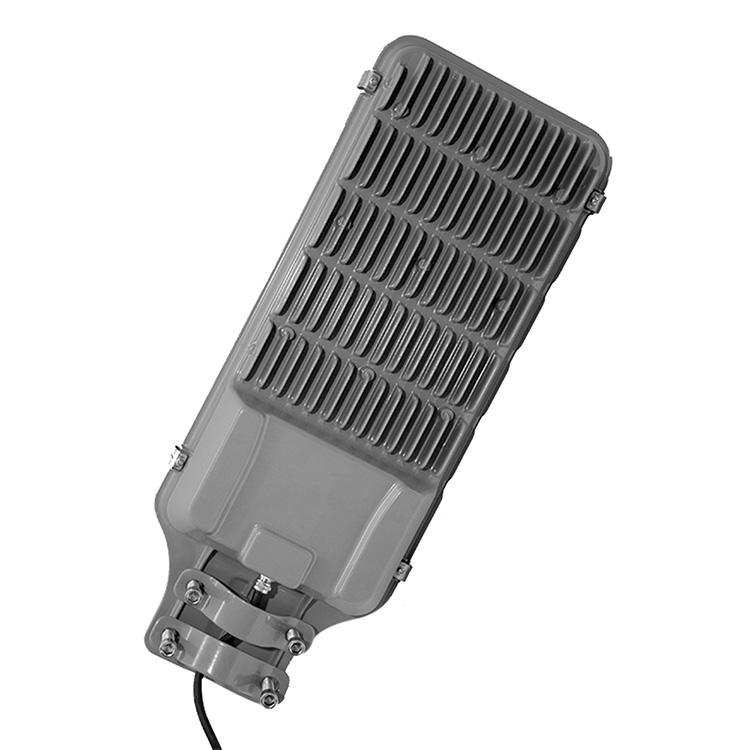
| Performance Indicator | Ordinary Low-Cost Sodium Lamp | Premium Industrial High-Pressure Sodium Lamp |
|---|---|---|
| Average Service Lifespan | 3000–5000 hours | 18000–24000 hours |
| Lumen Attenuation After 6 Months | Over 40% | Less than 15% |
| Environmental Adaptability | Poor waterproof & dustproof, unstable in extreme temperature | IP65 dustproof and waterproof, adaptable to -40℃~+60℃ |
| Power Consumption Efficiency | High energy loss, low luminous efficiency | High photoelectric conversion rate, obvious energy-saving effect |
| Voltage Adaptability | Narrow range, easy to flicker under voltage fluctuation | Wide voltage adaptation, stable lighting at unstable grid voltage |
| Maintenance Frequency | Monthly inspection & frequent replacement | Quarterly maintenance only, almost no frequent parts replacement |
Long-time continuous operation in industrial and agricultural environments puts extremely harsh requirements on lamp stability. Dust accumulation, humid air and frequent power switching will damage inferior lamp tubes quickly. The high-pressure sodium lamp uses anti-corrosion bulb shell, high-temperature resistant electrode wire and tightly sealed gas cavity structure. It resists oxidation and aging effectively, keeps stable light output for years, and greatly reduces repeated labor and material costs caused by frequent lamp replacement.
For agricultural breeding lighting, spectral wavelength of high-pressure sodium lamps matches well with plant photosynthesis and animal physiological habits. Reasonable yellow-white spectrum avoids strong glare damage, promotes normal growth cycle of crops and livestock, and improves breeding yield and quality significantly. Compared with LED lights that have single spectrum and poor penetration in foggy weather, sodium light has stronger atmospheric permeability, remaining clear and bright on foggy, rainy and hazy nights.
Large-area outdoor places such as factory yards, parking lots and logistics warehouses require uniform large-range illumination. This type of sodium lamp has reasonable light irradiation angle, no dark areas and no overlapping glare. It improves night visual clarity, lowers safety accidents caused by insufficient lighting, and meets national safety production illumination specifications perfectly.
In summary, selecting suitable high-pressure sodium lamps is not a simple procurement choice, but a long-term layout to control operation cost, improve safety level and stabilize production efficiency. Focusing on hidden quality problems, environmental adaptability and actual service life rather than superficial price advantages can help users avoid repetitive losses and obtain durable, stable and cost-effective outdoor lighting solutions for years.